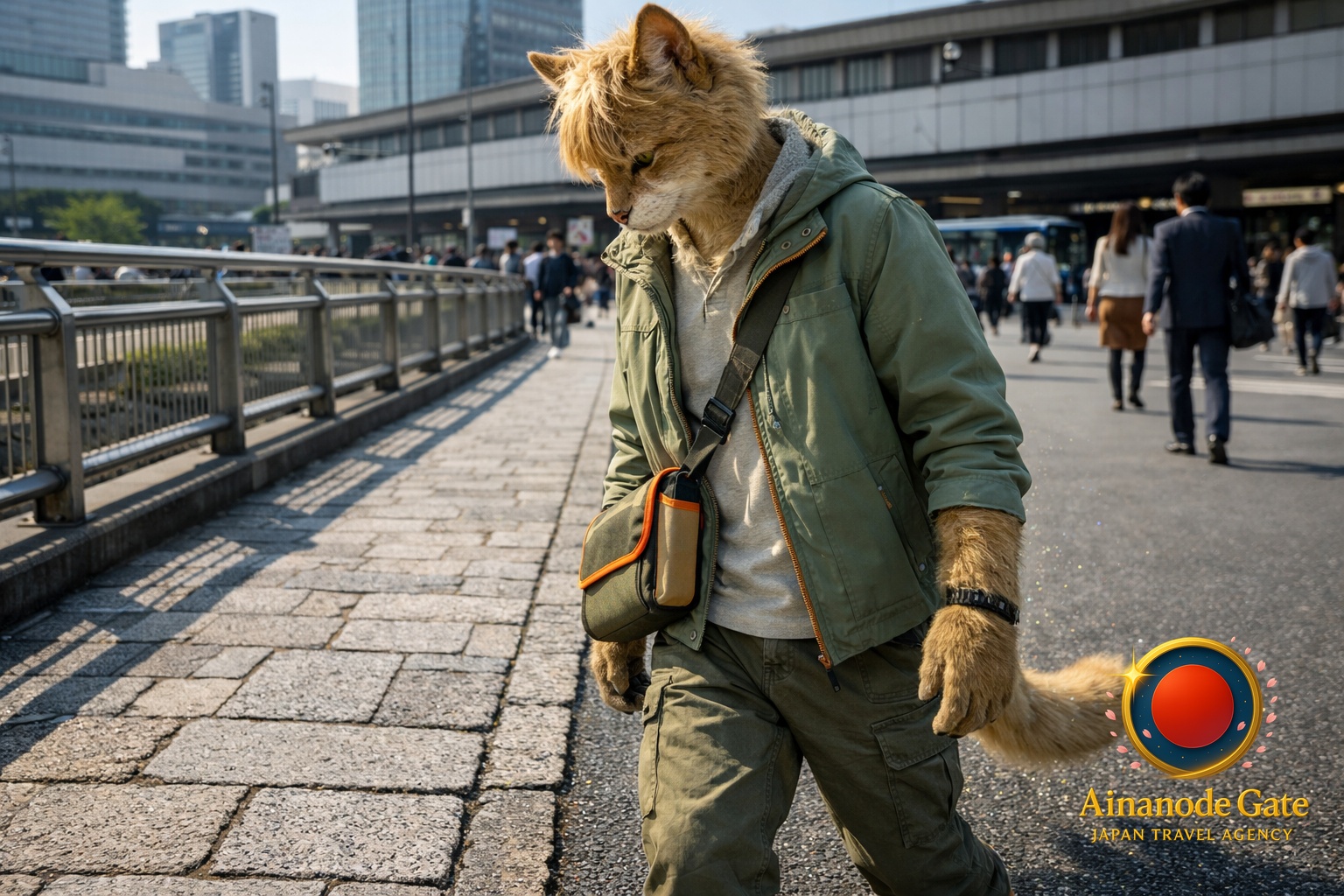
Deck Edge Pulse in Shinjuku
At 08:15 on a clear morning, the west exit deck of Shinjuku Station in Tokyo reflected a pale sheen across the concrete panels.
Commuter streams stayed dense yet evenly spaced, and the airflow remained dry with no umbrellas drawn.
Deck-Edge Field Notes
Quiet Flow Mapping
Kemu is a quiet Beastfolk observer whose paws read vibration along stone seams, drawing meaning from how surfaces tilt.
Their long tail and low center of gravity temper their pace, keeping curiosity focused on how Shinjuku’s layers bend around steady breath.

The west exit deck of Shinjuku Station pressed bright under my paws and my breath steadied as I moved from the railing edge toward the down escalator throat, letting the shift from open glare into the covered lip cool my ears.
At the escalator base beside the bus berths, my shoulders loosened because the draft sliding through the underpass stayed cooler than the plaza heat, so I angled along the tiled seam where footsteps thinned.

Along the granite base of the office towers facing the bus court in Shinjuku (Tokyo), my balance softened when I followed the guiding groove between drainage grates, and the strip felt wider than the pinch near the JR ticket gates.
My shoulder sat lower than the glass guardrail tracing back toward the Odakyu frontage, and resting one claw on its metal cap steadied the tremor in my wrist while taxis roared below the deck edge.
When the painted crossing lines near the station frontage stayed slick from overnight rinsing, adjusting my stride length to land on the darker asphalt gaps kept my claws from splaying and kept my weight stacked over my hips.
As a Beastfolk, I chose the left lane along the underpass toward Kabukicho and adjusted my pace so my tail cleared the low handrail, which eased the tension blooming along my lower back.
Emerging from the underpass up the ramp toward Shinjuku (Tokyo)’s station frontage again, my breath slowed because the crowd here was quieter than the concourse surge, giving me room to track how light bands mapped the paving.
Along the alley row behind the west-side police box, warmth from a bakery vent lifted the chill in my chest and the corridor felt gentler than the roaring crossing, so my steps loosened into an easy prowl.
Crossing back through the plaza toward the JR east gate, my gait lightened as I matched the tempo of the LED floor arrows, and relief spread across my shoulders knowing the loop stitched the district together.
The tile-to-asphalt shift reminded me that textured seams announce how Shinjuku’s levels breathe, and keeping breath aligned with those seams preserves steadiness.
The underpass lane rewarded the left-side patience, showing how small adjustments in tail clearance open calm gaps even when the deck above thunders.
I leave the west exit plaza of Shinjuku (Tokyo) feeling genuinely restored because the route from deck to alley taught my Beastfolk stride how ground textures can slow my pulse without stopping the exploration.



Let the deck railing guide your shoulder height so grip replaces tension.
Favor the cooler underpass seam when crowds glare above; the breath finds room there.
Loop back through the alleys to feel how warmth and narrow walls soften the station’s metallic tempo.