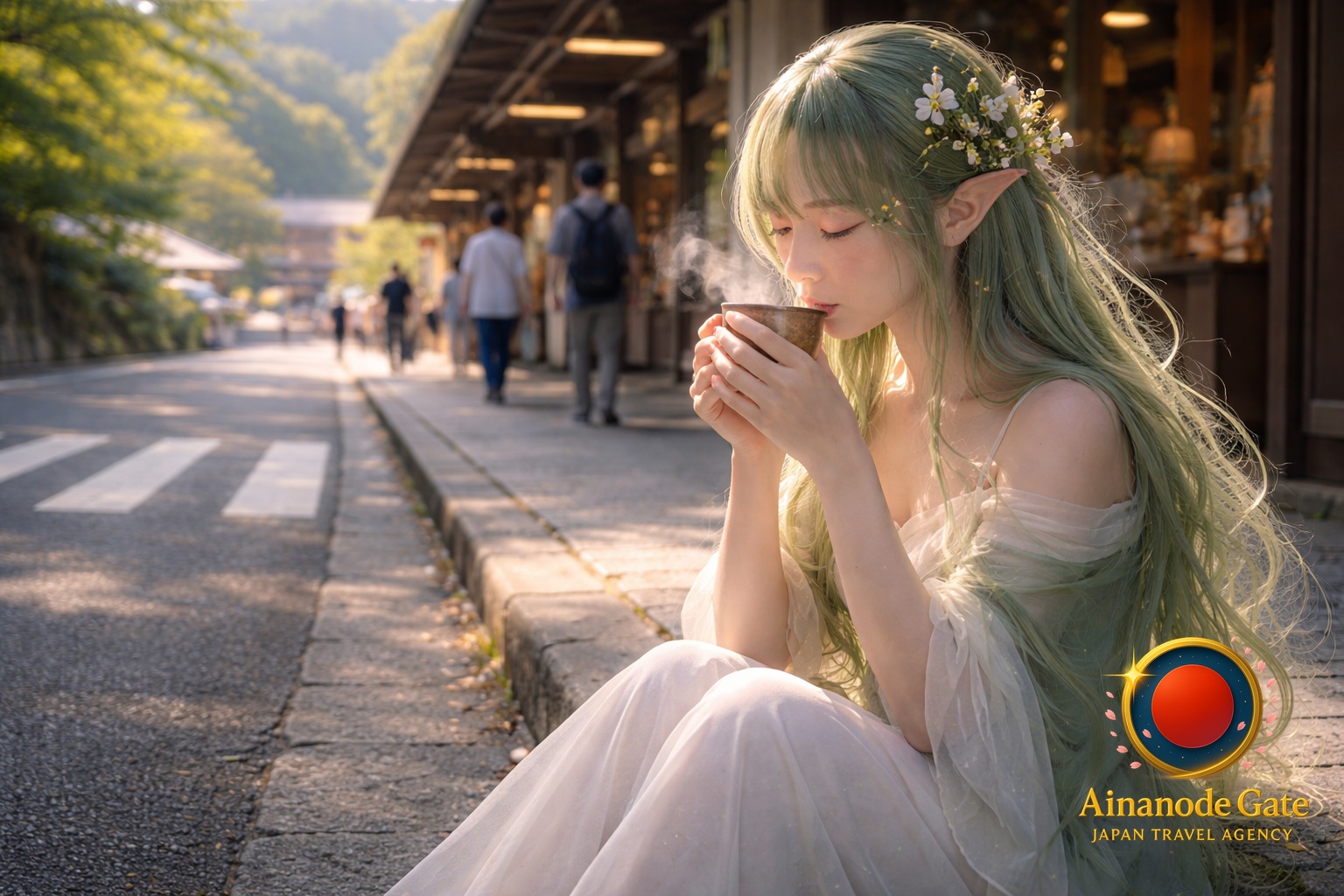
Hakone at Foot-Level: Steam, Stone, and Quiet Turns
In Hakone, this walk began near Hakone-Yumoto Station at 9:10 a.m.
The weather was clear, with dry air and direct sun on open pavement.
Crowd density was moderate at the station crossing and lighter along side streets toward the riverside slope.
Stone Seams, Steam, and the Pace Between Corners
Liora is a Nymph whose movement depends on small surface changes, so curb grain and painted lines register before distant landmarks.
As a quiet observer, she stays close to edges, tracks shelter shifts, and lets texture set timing instead of crowd speed.
Where My Breathing Found a Route


From Hakone-Yumoto Station, I moved across the first crossing toward the river road, and the bus wind tightened my shoulders as painted stripes flashed brighter than the asphalt.
As a Nymph, I chose the outer edge and adjusted my pace to the curb texture, because the shallow curb lip matched my stride length better than the center drain covers.
The route turned from the open crossing into a short slope along a stone wall toward a covered walkway, and my breath slowed as the noise thinned.
At that slope, my shoulder stayed level with a railing just below shoulder height, and that body-height reference kept my balance from tipping downhill.
When painted crossing lines heat under clear sun, adjusting each step onto the rough aggregate between stripes results in steadier balance and less calf tension.
Along the covered walkway in Hakone, I stopped at a stand and began sipping a steaming amazake cup while vapor crossed my face and drifted under the canopy ribs.
The warm sweetness met cool river air at once, and the sensory mismatch loosened the tension in my chest while my breath found a slower count.
From there I went across a narrow bridge into a plaza where crowd spacing was wider than the station front, and the stone joints felt easier to read at my eye level.
However, as groups moved toward the souvenir street, I stayed along the quieter outer edge instead of the center flow, and my shoulders dropped as a clear relief.
Back through the covered stretch and out of shade into the crossing again, I felt tension gather for a moment, then settle because the edge route held my balance.
What Stayed in My Steps
I kept noticing texture before direction, and that changed my breath timing before each turn.
My shoulders now soften at shelter edges, because the covered boards in Hakone gave me a stable rhythm to carry back into brighter crossings.
The moment of sipping the steaming amazake cup stayed with me as a pacing cue, linking warmth, footing, and attention in one action.
I now read the quieter outer edge more quickly than the center flow, and that route memory feels less than strain and more than haste.
How the Loop Settled in Me
In Hakone, choosing the outer edge from the bridge back through the covered walkway, then re-entering the crossing after sipping the steaming amazake cup, made this exploration genuinely worthwhile for me. That sequence turned bright, tense pavement into a route where I could keep steady balance and feel real relief while moving.

Hakone remains in my body as a chain of textures: painted line, curb grain, stone seam, and sheltered boards.
Relief arrived where slope met railing and where drink steam met river air, not at a destination point.
The walk lingers as a practiced rhythm of choosing quieter edges and letting space reset my breath.