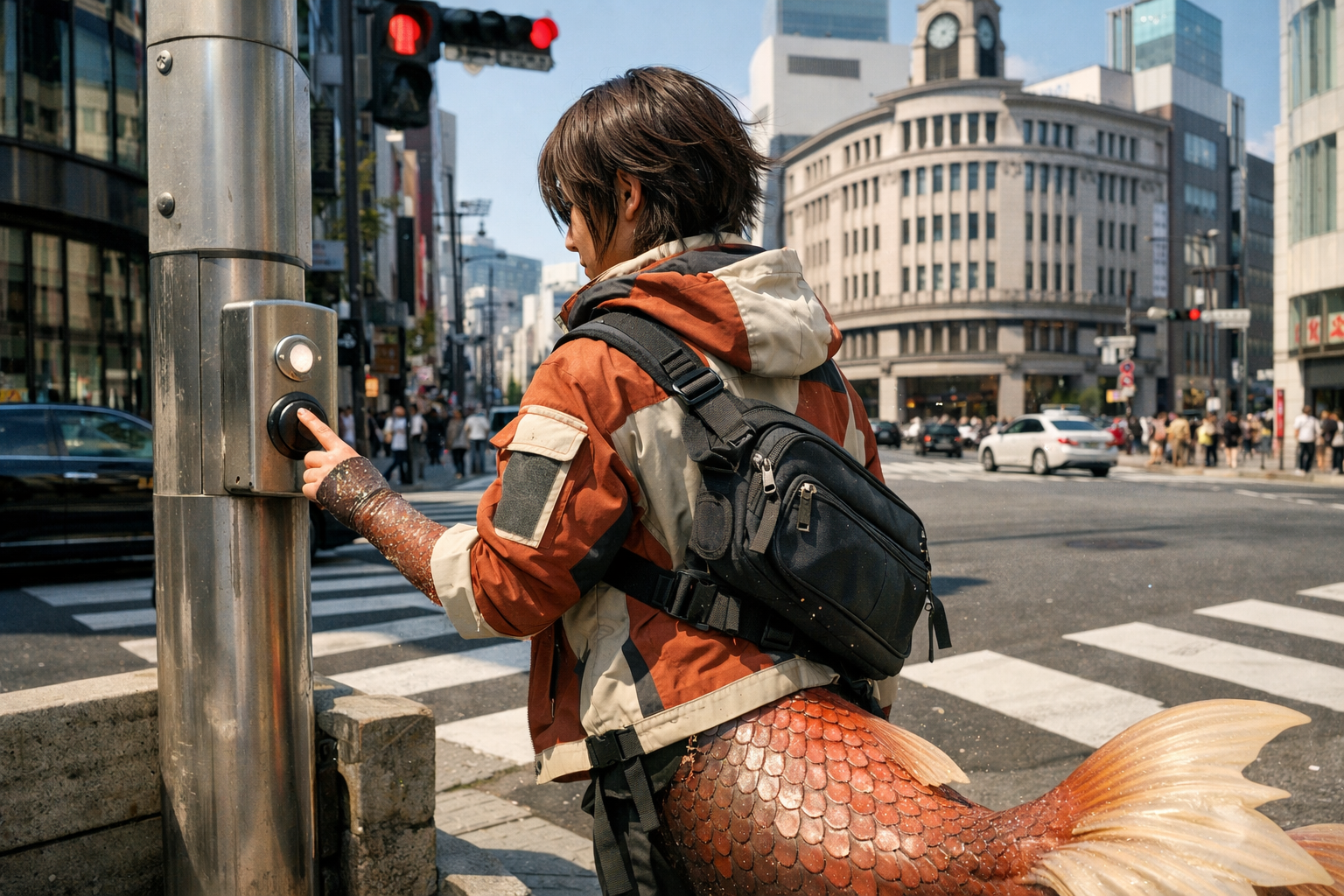
Ginza Sidewalk Currents
Ginza, Tokyo at 10:00 under a clear 18°C sky.
Sidewalk edges hold a steady weekday crowd with moderate queues at each crossing.
Broadlight Finds Its Pace
Luminous Current, a soft-spoken Merfolk accustomed to tidal plazas, arrives with banded fins wrapped for land-walk balance and a quiet readiness to read every curb seam.
Their quiet observer nature keeps attention low to the paving, letting glass reflections and body temperature guide each movement.
Streetline Undercurrent
My breath steadied as I rose from Ginza Station B7 exit into the dry light, tail-bound legs testing the granite steps while Chuo-dori traffic hummed ahead.

Along the storefront line toward Ginza 4-chome, my shoulders relaxed as smooth paving kept every step even while mirrored displays flashed more than the passing crowd.
At the Ginza 4-chome crossing I tapped the stainless crosswalk button with webbed fingers, pulse quickening as the click promised a green stream through the bright intersection.
Crossing from the intersection toward the Sukiyabashi corner tightened my balance over each white stripe, then eased once I reached the traffic island that sat quieter than the main lanes.
When the polished granite near Wako’s facade held a thin wash of cleaning water, adjusting my stride to the storefront shadow kept my gill-lines moist and steadied my knees for the next block.
I continued along the outer curb toward Yurakucho, breath cooling as a funnel of wind between taller facades narrowed the air more than the open avenue behind me.
From the plaza edge I slipped into a backstreet beside a delivery bay, and the hush softened my chest while neon reflections dulled instead of flaring.
Navi stayed silent, so my own ribs answered, feeling weight lift as I mapped the tighter corridor back toward the station signs.
As a Merfolk, I chose the shadier service corridor instead of the blazing center lane, and adjusting to shorter steps kept the scales along my shins from tightening against the dry air.
A brass handrail outside Ginza Six rested just below my collar fin, so touching it briefly let tension leave my shoulders before I rejoined the faster sidewalk current.
However, when taxis pooled along the curb, the crowd pressure more than doubled, which made my pulse race until I slid along the building edge where the flow steadied again.
The moment underpass music drifted up from Yurakucho Station’s entrance, my breath lifted and I tracked back through the cooler arcade, letting the tiled chill calm my stride.
From the underpass I emerged across Sotobori-dori and into a breezier pocket, and my balance settled as the space felt wider than the shopping front I had left behind.
Returning toward the main intersection, I traced along the tactile guiding line, and my heart eased when I felt the grooves underfoot steering me more than the crowd noise.
Lingering Sidewalk Echoes
Ren angles the experience toward what movement knowledge should remain after the walk.
Cool station exits give the body time to reset before facing the mirrored heat along Chuo-dori.
Backstreet corridors in Ginza keep breath steady when facade glare feels more than your shoulders can hold.
Handrails and tactile lines share the load when curbside taxi wakes disturb balance.
Ren’s Summary
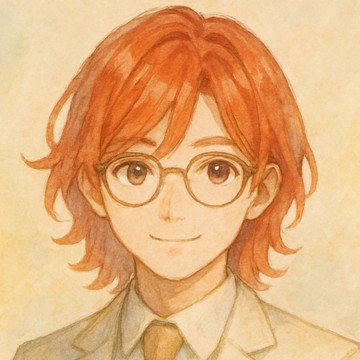
Ren notes how Luminous Current kept mapping Ginza’s contrasts—station shade, avenue glare, backstreet hush—so the route itself became a soft-tide score readers can reuse.
I left Ginza’s station edge feeling lighter because slipping from the glare of Chuo-dori into the cooler backstreet and then back across Sotobori-dori taught me that changing surfaces there can loosen my shoulders faster than any rest stop, so the whole walk felt purposefully renewed.

The granite underpass chill still lingers in my breath rhythm.
The stainless crosswalk button’s click echoes as a cue to trust the signal more than the crowd surge.
The handrail at collar-fin height remains a reminder to read railings as pauses, not obstacles.