Ginza Side-Flow Thermos Pause
Clear mid-morning light lay across Ginza, Tokyo at 10:15 with crisp air, dry pavement, and steady pedestrian flow along the storefront line.
The crowd was moderate, spreading evenly across the broad sidewalks near Ginza Station Exit B7 while traffic moved predictably at the intersection.
Slow Shoulders Against the Glass Canyon
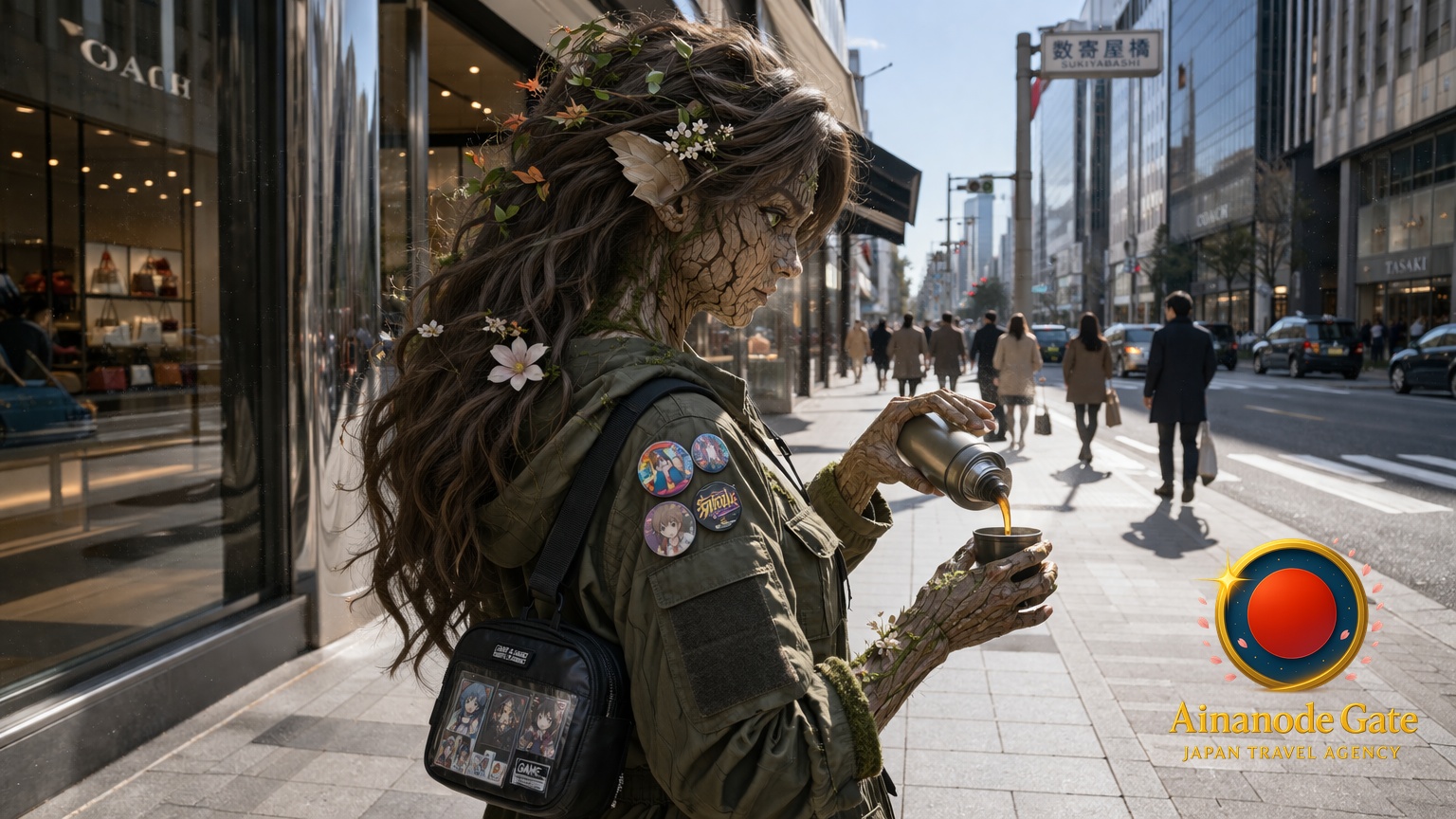
Kirikaze is a Dryad whose bark-textured skin reads subtle drafts; their quiet observer nature leans into pauses that widen perception.
Their stride stays soft along urban stone, and their sap-slow pulse steadies when hands can graze polished railings without splinter fear.
Along the main sidewalk edge facing the Ginza Six frontage, my wooden shoulders steadied as breath cooled against the glass canyon and I felt curiosity loosen tight bark with each measured step.
When the crossing signal near Chuo-dori pulsed green, my balance shifted from station-facing flow into the wider-than-expected diagonal, and the sudden openness eased tension more than the narrow arcade behind us.
Toward a quieter backstreet lined with smaller galleries, I felt my breath shorten because the narrower curb forced my stride length to shorten instead of stretching comfortably.
As a Dryad, I chose the shadowed side along a granite storefront, and adjusting my pace there softened the warmth building beneath my bark so the walk stayed calm.
From the main intersection into a side-follow corridor beside a watch boutique, my shoulders brushed close to a waist-high railing whose chrome sat just under my collar line, reminding me how compact Ginza’s edges can feel.
When a delivery truck idled ahead, adjusting my step to skim the storefront line rather than the curb resulted in a smoother breath because the engine heat would have tightened my chest.
Along a sheltered stretch near the Mitsukoshi corner, the crowd felt quieter than the open crossing, and I noticed my pulse steady as polished tiles reflected enough light to guide each footfall.
Back through the alley returning toward Sukiyabashi, I sensed my calves tighten on the subtle slope, yet the shift kept me alert, which made the city’s layered rhythm more legible.
I paused beside a recessed bench pocket, poured a thermos cap cup of warm roasted tea, and lifting it for a measured sip let steam moisten my cheeks while I kept shoulders lowered to avoid crowding passersby.
When the sidewalk narrows under the building overhang, adjusting my step to hug the storefront glass results in less elbow brushing, so the sip could finish without spilling.
My bark fingers noticed the cap cup rim cooling faster than air above the granite ledge, and that micro chill made me realign my grip and deepen my breath.
The second transition carried me from that pocket toward the open plaza near Yurakucho, and the wider view eased my spine, revealing how Ginza’s grid rewards patience more than speed.
I realized the route mattered because the careful shifts from station exit to backstreet to plaza loosened my shoulders and made Ginza’s precise pace feel welcoming, so I felt grateful that this measured wandering along Chuo-dori translated into confidence.
Sheltered Pulses Along the Frontage
Glass reflections along broad sidewalks soften when shoulders drop to storefront pace.
Narrow backstreets lend alert balance that carries into wider crossings without losing calm.
Steam-warmed breaths near sheltered benches keep focus sharp for the return into crowd flow.
I carry the memory of Ginza’s side-flow because adjusting each shoulder brush and sip around Sukiyabashi let the city answer me, and Navi hums softly that shared patience can anchor anyone in the central brightness.
Shoulders remembered the chrome railing’s exact height and kept the stride humble.
Breath followed the steam curl from the thermos cap cup and mapped shelter pockets.
Balance shifted twice—from station front to backstreet to plaza—conditioning trust in the grid.
Quiet cadence stayed tucked inside Ginza’s storefront line, steady and observant.