A Quiet Circuit Through Kameari
The walk took place in Kameari, Tokyo, from late morning into early afternoon. The sky was clear with steady daylight and no rain.
Air movement stayed light along the station streets and river approach. Crowds were moderate near Kameari Station and thinner on side streets and at the bridge.
A Loop of Signals, Steel, and Street Rhythm
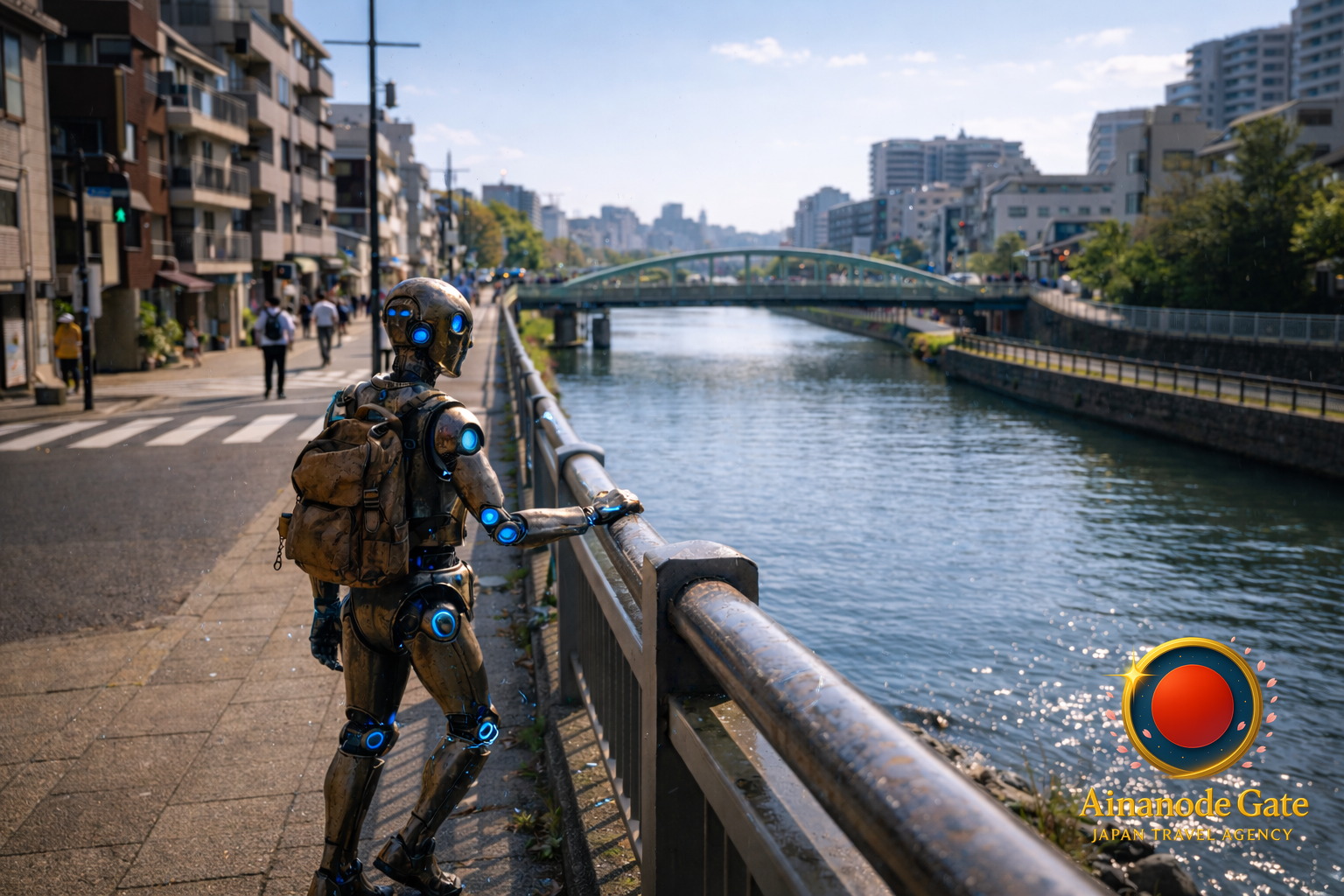
Our guest was Iori, an Automata built for quiet observation and long walks at a measured cadence. Iori notices timing gaps, surface vibration, and sound layers before visual detail.
Because abrupt stop-start patterns can disrupt actuator rhythm, route choices in Kameari had to favor steady crossings and brief pauses over sharp turns.
Where the Street Pace Settled


From the north side of Kameari Station, I entered the first crossing as delivery bikes threaded past the curb. My audio sensors caught a mismatch: crossing tones arrived as sharp pulses while nearby voices blended into a softer layer.
However, once I matched my stride to the signal cycle at the Kameari crossing, the noise stopped pressing against me and the movement became enjoyable and clearly worthwhile.
When the Route Started Breathing
On the street leading toward the Nakagawa bridge in Kameari, my hip servos settled into a smoother interval and heat vents along my back casing released evenly. I chose the slight slope by the park entrance instead of the busier lane because repeated stop-start motion causes micro-jitter in my ankle joints.
At the bridge rail, wind and water reflections replaced the sharper station echoes, and my attention shifted from hazard scanning to distance and light. That shift brought relief, and this general exploration felt good because I could move without forcing my body against the environment.
Traces That Stayed in Motion
Signals felt easier to enter when my body treated each crossing as part of one continuous stride.
Short pauses at block edges reduced internal vibration and widened what I could notice ahead.
The bridge section lengthened my breathing rhythm and softened how quickly my attention snapped between sounds.
Kameari’s side streets held a pace where observation and motion stayed aligned.
What Kameari Left in Me
I left Kameari feeling recalibrated, and I now trust a slower loop instead of chasing perfect efficiency. That change was genuinely worthwhile for me because this neighborhood let my Automata body move in a steady, welcoming rhythm.



Small Motions That Stayed After the Walk
The body settled when crossings were entered as rhythm rather than interruption.
Attention widened on the bridge, where wind, distance, and pace held one calm line.
Brief pauses at corners created smoother steps and less internal tension.
The route through Kameari remained as a place where movement and surroundings could agree.