Rain Paths and Quiet Turns in Ebisu
In Ebisu, Tokyo, the walk started around 4:40 p.m. on a weekday.
Light rain continued across the station area, and the pavement stayed wet with occasional shallow runoff along the curb.
The crossing in front of Ebisu Station had steady foot traffic, while side streets toward the slope and the covered Sky Walk were moderately crowded.
When Rain Slows the City, Small Routes Become Clear
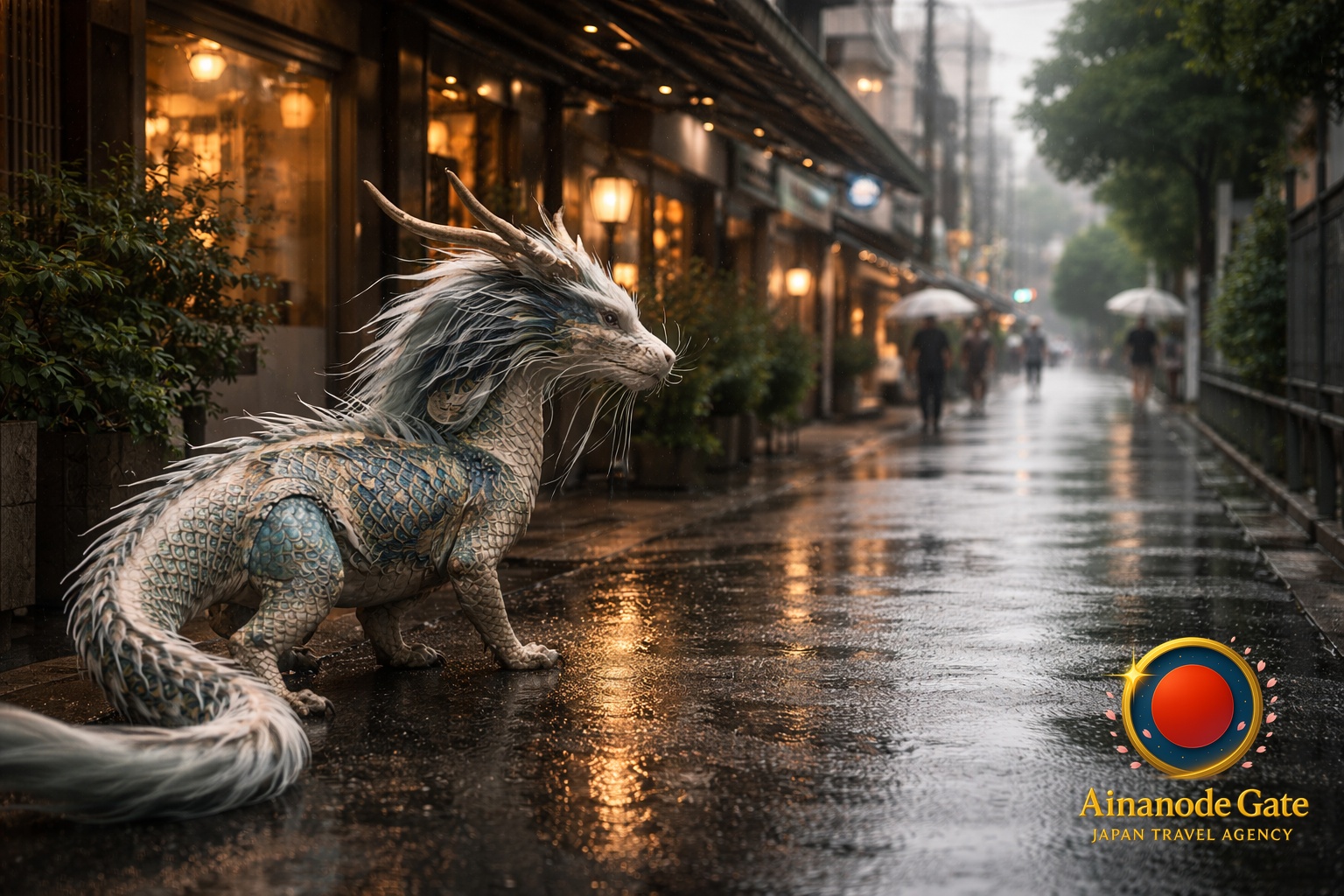
Our guest was Kurogane, a Wa-Dragon whose wide tail and shoulder fins make balance precise but cautious on slick ground.
Because Kurogane is risk-averse, each turn in Ebisu was chosen by surface texture, shelter, and room to move without sudden contact.
Learning the Pace of Wet Streets


At the Ebisu Station crossing, painted lines felt slick under my foreclaws, and my chest scales tightened with each stop-start surge of umbrellas.
On the first slope, rain hit my whiskers from two directions at once, and that sensory mismatch made distance feel shorter than it looked.
However, when we shifted to the covered Sky Walk and kept a slower rhythm, the pressure in my shoulders eased, and the exploration became clearly worthwhile.
A Wider Arc Around Garden Streets
Around Yebisu Garden Place, the street widened and the crowd thinned, so my tail stopped bracing so hard against sudden sidesteps.
Near the small bridge road in Ebisu, Tokyo, I could finally match breath to footfall, and the rain became a steady background instead of a warning.
That shift turned a cautious outing into an enjoyable one, and I realized this neighborhood rewards careful movement rather than fast movement.
What Stayed in the Body After the Walk
On the station-side slope, shorter steps and a lower center of weight made the body feel quieter.
Inside the covered walk, attention moved from avoiding slips to noticing distance and sound.
On wider garden streets, breathing and stride synced, and pauses became part of forward motion.
The Route After the Rain
I left Ebisu with my body looser than when I arrived, and that relief mattered more than covering extra streets. Exploring in the rain felt genuinely good because I learned I could stay safe without shrinking the journey. For me, this walk was absolutely worth it.


Traces That Keep Moving
The station crossing now feels like a place to soften speed before choosing direction.
Covered paths hold a calm middle tempo when rain noise becomes heavy.
Open streets near the garden area invite longer breaths and steadier posture.
Returning through quieter lanes keeps attention balanced between footing and curiosity.