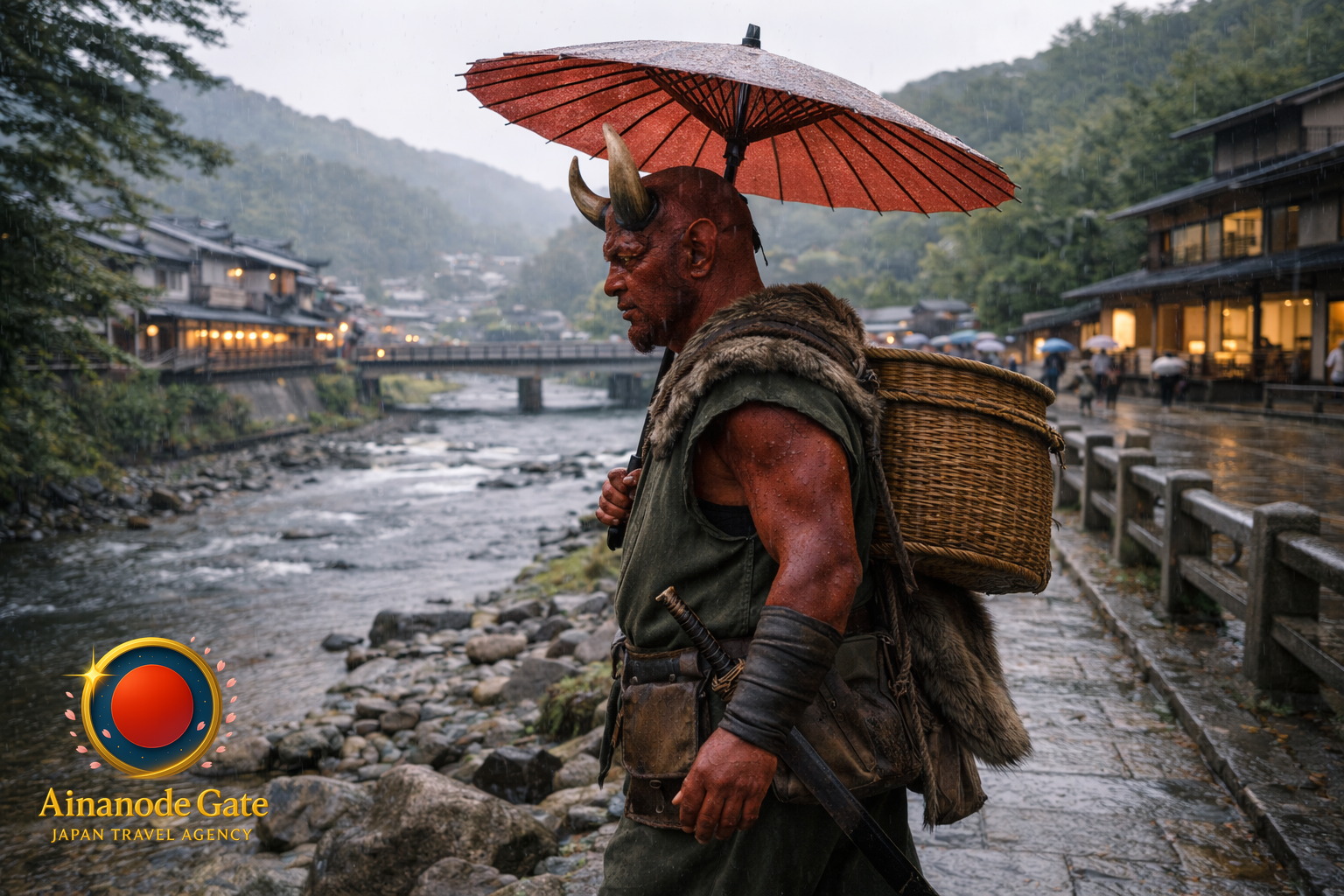
Rain Paths and Red Horns in Kyoto
The walk began in Kyoto at 9:10 a.m., starting near Kyoto Station.
Light rain continued through late morning and returned in short bursts after noon.
The temperature stayed around 12C with damp wind along the Kamo River.
Kyoto Station and Nishiki Market were crowded, while side streets near Gion were lightly crowded.
Rain Lines Across Kyoto, One Step at a Time
Goro is an Oni traveler with high curved horns, a heavy stride, and skin that holds heat longer than human skin.
Those traits shaped his exploration in Kyoto, since cool rain eased his body while low eaves and narrow awnings kept changing his movement.
Where the city adjusted my pace

From Kyoto Station, I followed the tiled path toward Karasuma Street and listened to rain tapping on bus canopies. The scent of wet stone rose first, but warm bread drifting from a station-side bakery arrived sweeter than expected, and that sensory mismatch changed the block around me.
At the Shijo crossing, I turned my shoulders so my horns would not strike passing umbrellas. That physical adjustment shortened my stride, and my breathing settled into a calmer rhythm.
When we stepped onto Sanjo Bridge in Kyoto, cold drops reached the base of my horns and pulled heat from my skin. At that moment the slower exploration became clearly enjoyable, and the rain made the route feel worthwhile.
Inside Nishiki Market, steam from grilled food blurred my view while rainwater slipped from the awning edge onto my neck. The contrast startled me, then softened into focus as I continued one lane at a time.
What remained in motion after the rain
Near Kyoto Station, attention moved from destination to roof edges, and walking naturally followed the dry strips beside walls.
At bridge approaches, stride length shortened and shoulders lowered, letting wind and rain set the pace instead of resisting it.
In market streets, pauses formed at awning gaps, and restarting after each pause felt smoother than maintaining constant speed.
Kyoto answered through the way I moved
I left Kyoto knowing this rain-day exploration was worth every slow step, because the city met my Oni body without asking it to shrink. Moving between Kyoto Station, Shijo Street, and Sanjo Bridge gave me real relief, and that change made the day deeply good for me.
Movement that lingered after Kyoto
The rain invited a slower rhythm, and that rhythm stayed in my body even after the streets widened.
Each bridge crossing softened my posture, and the memory of that balance still feels steady.
Exploring without forcing distance made Kyoto feel close, layered, and genuinely welcoming.