- Chopstick Etiquette in Japan: Two Rules That Come From Funerals
- How to Hold Chopsticks: One Moves, One Rests
- The Two Rules That Come From Funerals
- Where to Rest Your Chopsticks Between Bites
- Taking Food From Shared Plates
- The Small Habits That Keep a Meal Comfortable
- At the Table, in Short
- Summary: Two Shapes to Remember, and the Rest Is Courtesy
Chopstick Etiquette in Japan: Two Rules That Come From Funerals


Chopsticks look simple, and in a way they are. Two sticks, one hand, and a little practice to find the right movement. What surprises visitors is that the sticks carry meaning beyond the food. In Japan, how you hold them, where you rest them, and what you never do with them all speak before you do. This is not a long list of fussy rules. Two of them matter deeply, and the rest is courtesy — the kind that keeps a shared meal comfortable for everyone at the table.
How to Hold Chopsticks: One Moves, One Rests
The grip feels strange for the first few minutes and then, suddenly, ordinary. Keep the tips level, pick up one piece at a time, and let the lower stick do the holding while the upper stick does the moving. Lift your rice bowl and your soup bowl toward your mouth with your free hand instead of leaning down over the table. If the grip will not come, ask for a fork or a spoon. It is perfectly acceptable to ask.
The Two Rules That Come From Funerals
These two are not matters of taste. Nearly everyone in Japan recognizes them, because the shapes are the funeral shapes, and bringing them to a dinner table makes people flinch. The fix is easy in both cases. If you need to set your chopsticks down, use the chopstick rest, or rest them across the edge of your bowl in a casual setting. If you want to share a bite, put it on the other person’s plate and let them pick it up themselves.
Where to Rest Your Chopsticks Between Bites
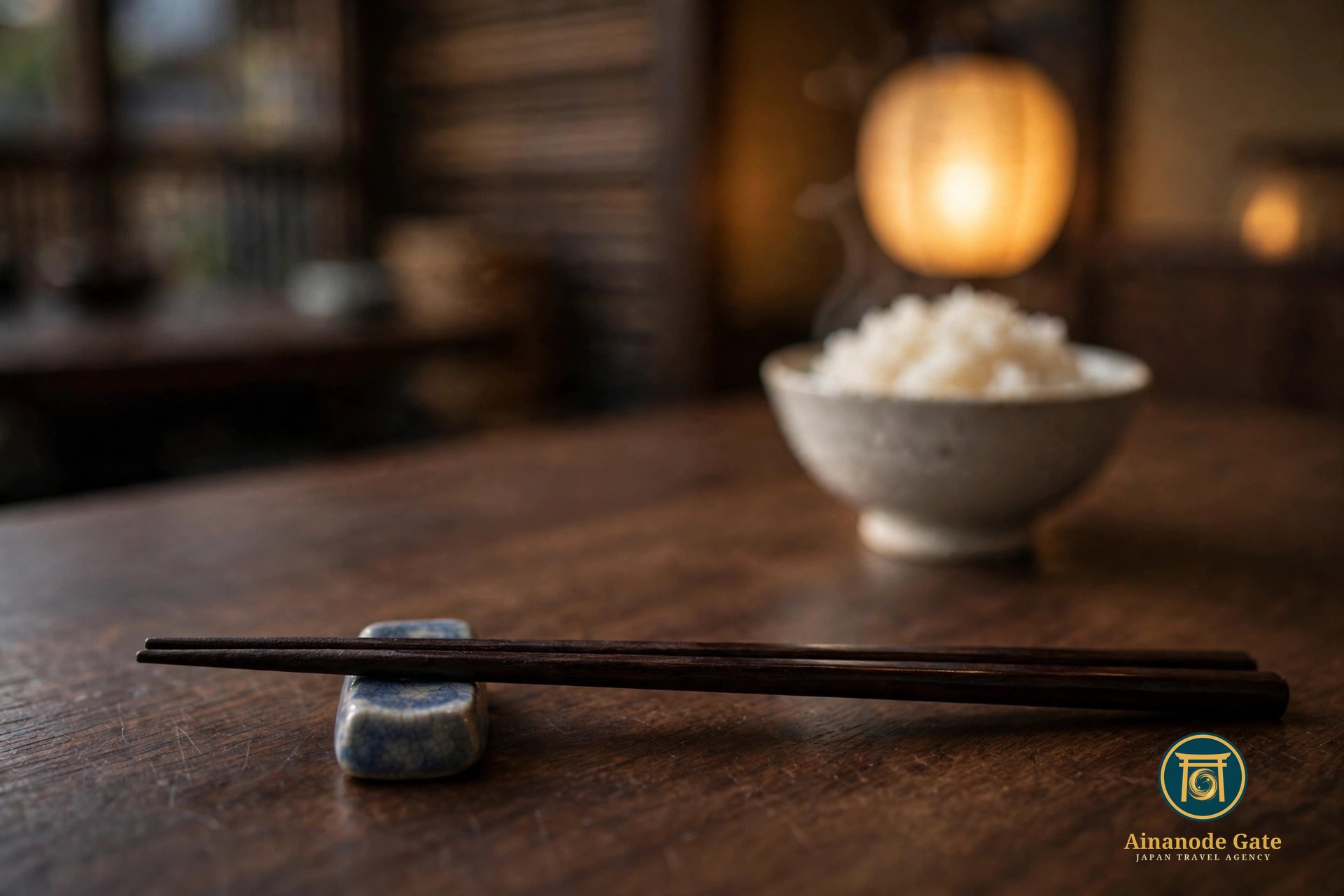
The rest exists so the tips never touch the table. When you finish eating, put the chopsticks back on the rest or into their paper sleeve. And when you split disposable chopsticks, pull them apart gently, sideways, at lap height. Rubbing them together to smooth splinters is seen as poor manners. If the pair is rough, ask for another.
Taking Food From Shared Plates
Some guides suggest flipping your own chopsticks and serving with the clean ends, but etiquette guides disagree about that, and the ends have still been in your hand. The safe default is simple: use the serving utensils when they are there, and ask when they are not. What you do not do is dig through a shared dish looking for the best piece. Take from the near side, one piece at a time.
The Small Habits That Keep a Meal Comfortable
The rest of the list is small, and all of it is about consideration. Do not hover your chopsticks over several dishes while you decide. Do not lick them. Do not pull a bowl or plate toward you with them. None of these will ruin a meal, and Japanese diners break the softer ones themselves. These small habits help keep the meal comfortable for everyone, even while you are still getting used to chopsticks.
At the Table, in Short
📌 Hold your rice bowl and soup bowl in your free hand while you eat
📌 Rest your chopsticks on the hashioki, or on a folded paper sleeve when there is none
📌 Use toribashi, the serving chopsticks, for shared dishes
📌 Never stand chopsticks upright in a bowl of rice
📌 Never pass food from your chopsticks to someone else’s
📌 Put your chopsticks down before you gesture or talk with your hands
Summary: Two Shapes to Remember, and the Rest Is Courtesy
Chopstick etiquette in Japan comes down to two shapes. Chopsticks standing in rice, and food passed from chopstick to chopstick. Both belong to funerals, and both stay out of dinner. Everything else is simpler: hold one stick still and move the other, rest them on the hashioki, use the serving chopsticks for shared plates, and put them down before you wave your hands. Learn the grip once, remember the two shapes, and the sticks stop being a test and start being what they are — the way you eat.



What to Remember at the Table
The grip: the lower chopstick stays still, the upper one moves like a pencil.
The two taboos: no chopsticks standing in rice, no food passed chopstick to chopstick.
The rest: the hashioki, or a folded paper sleeve when there is none.
Shared dishes: serving chopsticks first, and ask the staff when there are none.
Put the chopsticks down before gesturing or talking with your hands.